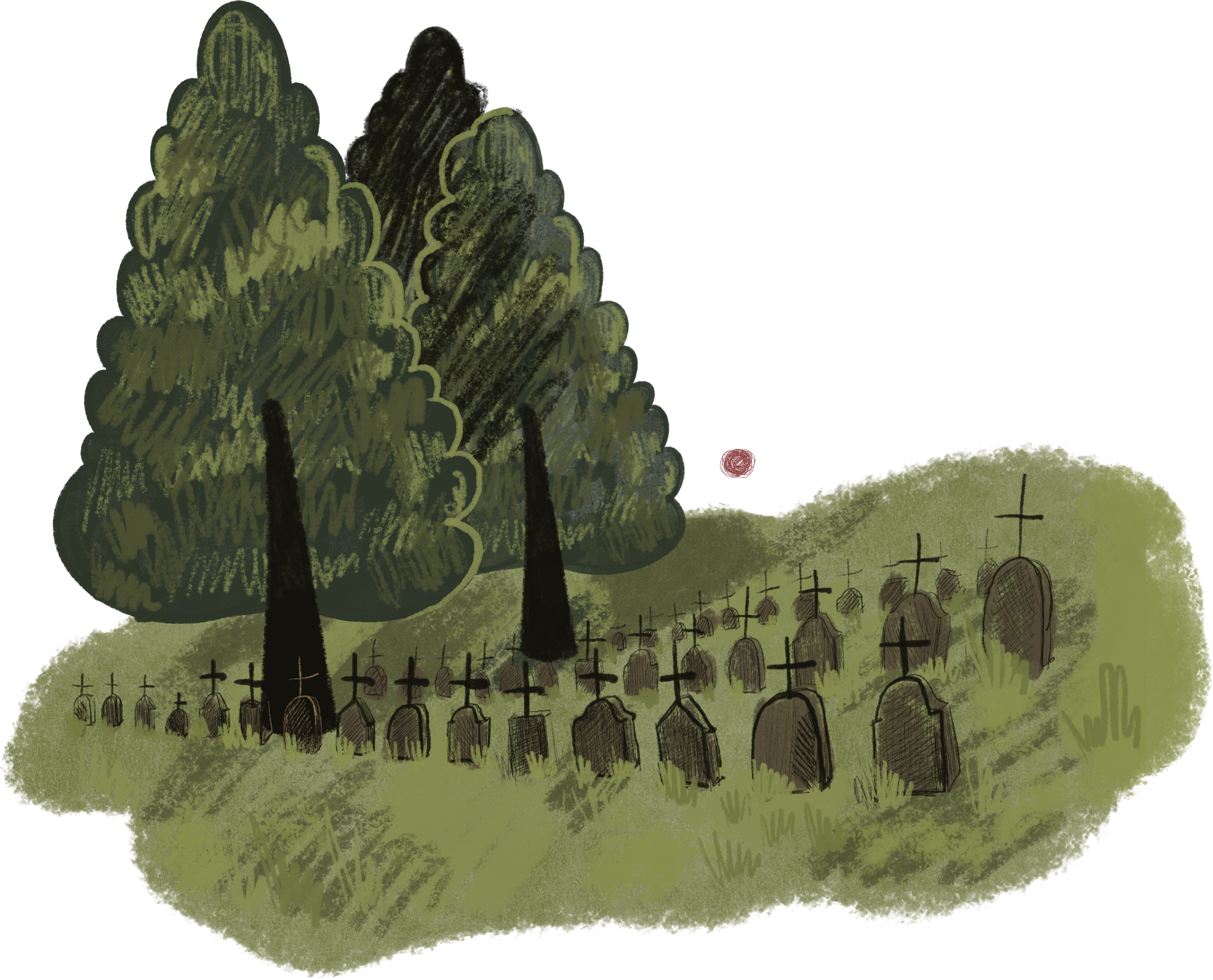
The Commission for the Investigation of Bolshevik Crimes mentioned the Vankovich Forest separately in its 1919 report. It likely referred to what is now Park Čaliuskincaŭ. Over two decades, people were mass murdered in this forest by communists, and during World War II by the Nazis.
From the late 1920s, this was a closed area used for executions. Immediately adjacent to it, between 1928 and 1933, a recreational park was created, which in 1934 received its current name — Park Čaliuskincaŭ. A year later, by decision of the Council of People’s Commissars of the BSSR, the recreation zone was expanded and merged with the forested land on the left bank of the Sliapianka River. The site grew popular among residents and thus was not very suitable for secret crimes. Researcher of Stalinist repressions Leanid Marakou suggested that during the Great Purge, when executions peaked, the Chekists used more suitable, remote, and concealed spots in the Lošycki Ravine and a new execution range now known as Kurapaty. The exact number killed by the communists in the forest park is unknown. Zianon Pazniak suggested that some of the Polish prisoners of war from the socalled “Belarusian Katyn list” may have been executed here.
During World War II, the Germans established a camp for Soviet prisoners of war here, Stalag 352. Thousands of Red Army soldiers died of starvation, cold, and disease and were buried in mass graves. After Minsk was liberated in 1944, an extraordinary commission recorded 41 pits with human remains on the park’s territory. By rough estimates, around 10,000 people may have been buried there. Whether all of them were victims of the Nazis is difficult to determine today. The Soviets often attributed crimes they themselves committed to the Germans. In 1955 a memorial to the victims of Nazism was erected at the mass grave site — a concrete figure called “Grieving Mother.”