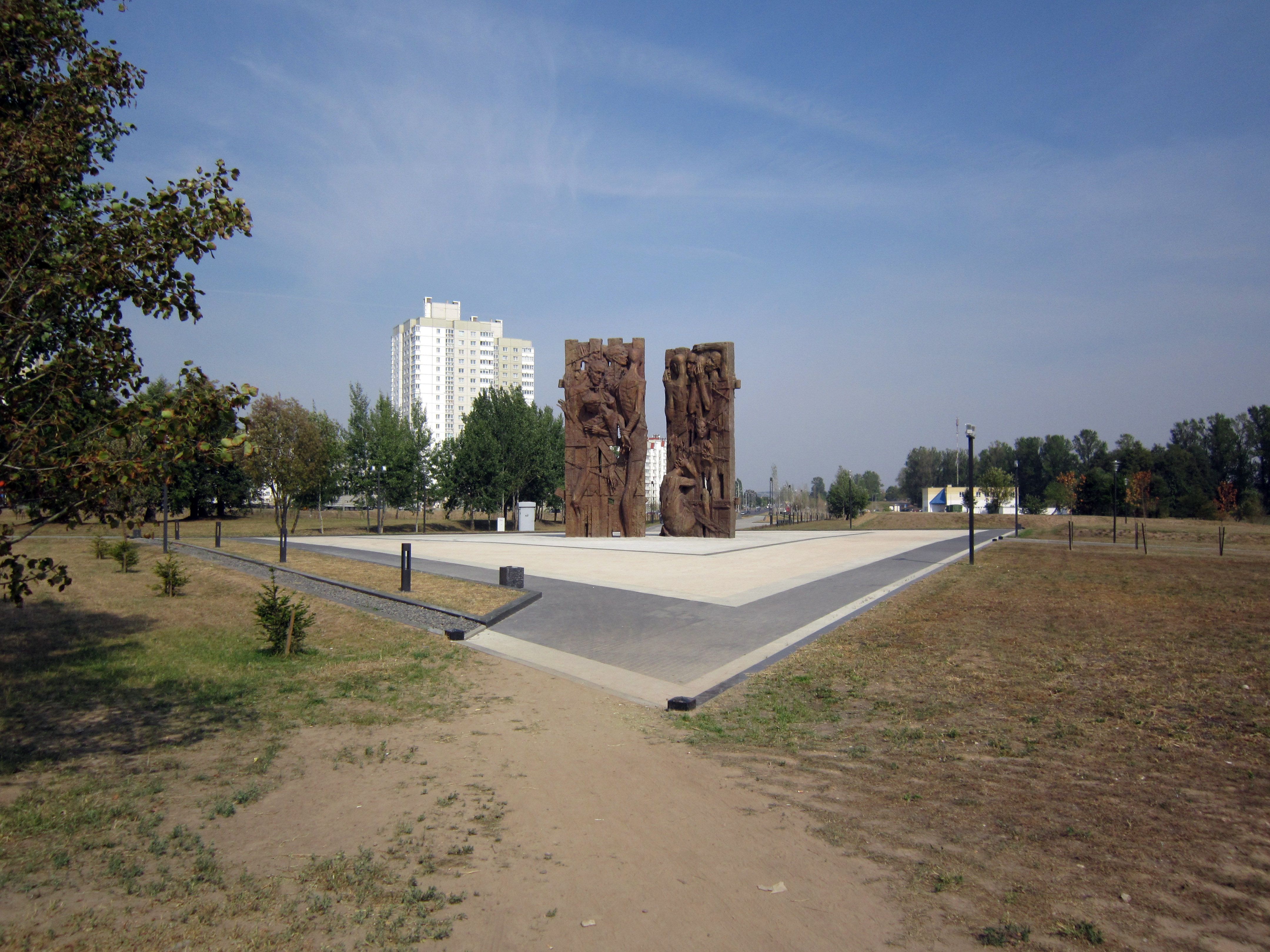
On 29 June 2018, the Blahaŭščyna Memorial Complex opened at the site of the largest death camp established by the Nazis during World War II. Peaceful Soviet civilians and Jews deported from various Western European countries were murdered en masse here. Just days before the memorial’s opening, local authorities destroyed crosses and memorial plaques at the site that commemorated crimes of another regime — the communist one.
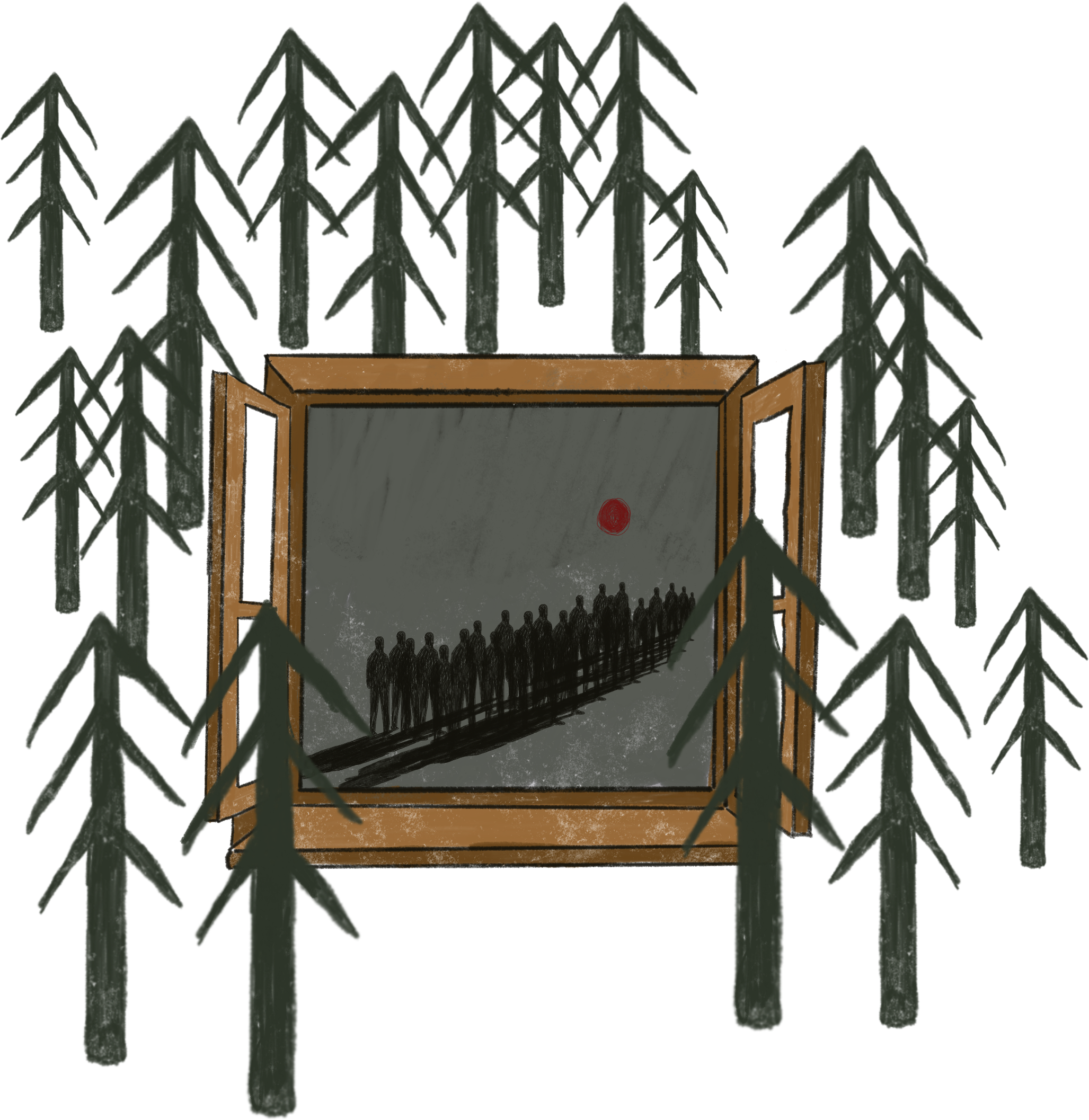
Blahaŭščyna Memorial ComplexIn the early 1990s, while preparing a book about 1930s repressions, Anatol Maisenia interviewed Tsodik, a former inmate of Minsk’s internal NKVD prison (Amerykanka). During the initial Nazi German onslaught on the USSR, the Belarusian NKVD received orders to evacuate prisoners from prisons to the east. In late June 1941, NKVD convoys escorted columns of prisoners from Minsk prisons and victims of the NKVD’s “cleansing” operations during the war’s first days along the Mahilioŭ Highway. On the morning of 25 June, the convoy guards executed inmates from one of the columns, of which Tsodik was part. This occurred near Trascianiec in the Blahaŭščyna forest. Tsodik miraculously survived.
Historian Ihar Kuzniatsou identified names of staff members of the NKVD’s commandant office who may have been involved in that execution: Nikitsin, Yermakou, Koba, Yakauleu, Astreika, Dubrouski, Bachkou, Batsian, Abramchyk, Mihno.
Another column reached Červień, where it was executed. As reported by Junior Lieutenant of State Security Kompaniyets, head of the 3rd division of the 42nd sniper brigade of the convoy forces, to Senior Major of State Security Belyanov, head of the 3rd division of the USSR NKVD: “On June 26, approximately 2,000 prisoners were evacuated by sniper company forces from Minsk prison, but due to systematic attacks on the column with prisoners near the town of Červień, upon coordination with the prison command, 209 political prisoners were executed, while prisoners held for ordinary crimes were released.” According to survivors, between June 26–27, 1941, NKVD convoy troops shot between 1,000 and 4,000 prisoners from Červień, Kovno, and Minsk prisons — victims of Stalin’s unjustified repressions.
Ihar Kuzniatsou believes that the NKVD may have carried out killings near Trascianiec even earlier. In the late 1930s, according to eyewitness accounts, homesteads north of the Blahaŭščyna forest were relocated, and part of the territory near the Mahilioŭ Highway was allocated to a facility under NKVD protection. Gunshots were often heard from there at night. Additionally, according to the historian, Polish prisoners of war may have been executed there as well.
The Nazis began establishing their concentration camp here in the autumn of 1941. After its liberation in 1944, the State Extraordinary Commission began operations at the site. At that time, the first official data on the number of people who perished there and were buried in 34 pits, later burned by the Nazis — over 500,000 — were published. However, according to documents in the collection Crimes of Nazi-Fascist Occupants in Belarus 1941-1944, published only in 1965, the figure given was 206,500 people.
Interestingly, the results of the 1944 commission’s research did not make it into USSR materials for the Nuremberg Trials against Nazi criminals. Researchers also point to another section of that Extraordinary Commission’s conclusion, which few people know about. When the Commission began its work, it found burials, some of which were located in the territory where the present-day dump appeared in 1956. The burials turned out to be pre-war. The excavations at this spot were immediately stopped, and the site was relocated 300-400 meters away. This version’s credibility is supported by numerous shell casings from Soviet pre-war weapons found in 1994–1995 by staff of the Museum of the Great Patriotic War in Blahaŭščyna while filming the documentary Trascianiec.
In one of his articles, Ihar Kuzniatsou cites a quote from A. Valkevich, former academic secretary of the Museum of the Great Patriotic War, made in 1994: “As it became known, more than 500,000 people perished in the Trascianiec area. But we were forbidden from making these facts public by members of the USSR’s Extraordinary Commission from Moscow. Why? Because, in their view, it was hard to believe... One could have invited international experts. The remains of half a million dead — that’s not a needle in a haystack. This raises another legitimate question: could this figure also include victims of the NKVD purges of the 1930s? The old residents of the villages of Vialiki Trascianiec and Maly Trascianiec did mention gunfire in the forest at night in pre-war times.”
In 1957, at the pre-war execution sites, with government sanction, a municipal dump was created, apparently to conceal traces of crimes. Otherwise, it is simply impossible to explain the appearance of this “masking site” here. And this was done, oddly enough, after the adoption in 1950, and again in 1956, of decisions to honor the memory of victims of fascism.